What Are Some Eco-Friendly Death Options Today
Quick Summary
Eco-friendly death options include green burial, conservation burial, natural organic reduction, alkaline hydrolysis, and memorial tree planting. A Taylor & Francis study ranks conservation burial at a nature preserve as the most eco-friendly, followed by regular green burial.
- Green burial uses no embalming and a biodegradable casket or shroud.
- Conservation burial takes place in a protected natural area.
- Natural organic reduction turns the body into soil over several weeks.
- Interest in green funeral options rose from 55.7% in 2021 to 68% in 2024.
- Memorial tree planting offers a protected setting that changes with the seasons.
Table of Contents
- Eco-Friendly Death Options You Can Choose From Today
- Green Burial and Human Composting Compared
- Alternatives to Burial and Cremation, and What They Cost
- Frequently Asked Questions
Eco-Friendly Death Options You Can Choose From Today
Last Updated: November 10, 2026
Many families now ask about eco-friendly death options, and the interest is growing. According to the National Funeral Directors Association, as cited by Wake Forest Law Review analysis of green funeral options, interest in green funeral options rose from 55.7% in 2021 to 68% in 2024. At Sunset Sanctuary, we help families look at living memorials as one of these choices. Alongside living memorials, families may consider a Barnwood Casket as another way to reflect their environmental values in burial choices.
Eco-friendly options generally fall into a few groups:
- Green burial: the body is buried without embalming, often in a biodegradable container
- Conservation burial: the burial takes place in a protected natural area
- Natural organic reduction: the body is turned into soil over several weeks
- Alkaline hydrolysis: the body is dissolved in water and a mild alkaline solution
A Taylor & Francis study on death systems ranks conservation burial at a nature preserve as the most eco-friendly option, followed by regular green burial.
Memorial tree planting is one option we offer. Our 135-acre nature preserve in Farmington, Minnesota, has over 80 acres of forest and 20 acres of wildflowers, so a memorial tree grows in a protected setting that changes with the seasons. Read more about the environmental impact of memorial trees compared with conventional burial.
Green Burial and Human Composting Compared
Green burial and human composting both return the body to the earth, but they work differently.
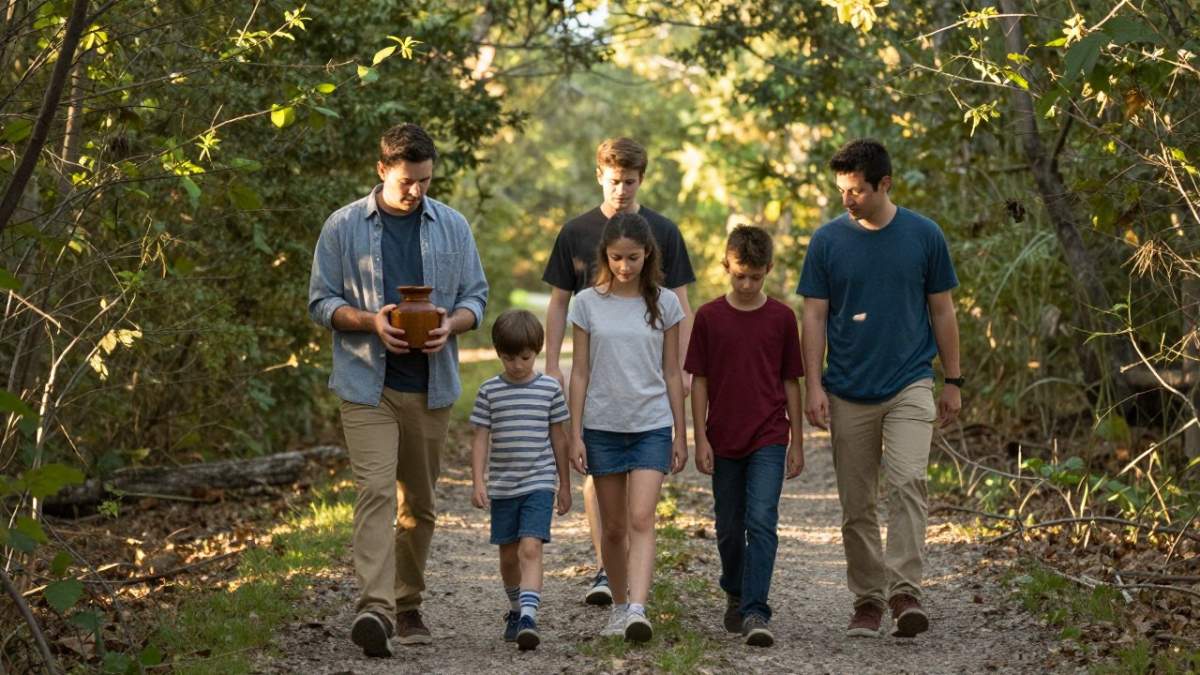
- Green burial uses no embalming fluid and a simple, biodegradable casket or shroud (Green Burial Resources for Funeral Professionals).
- Human composting uses a container with wood chips and plant material, and the body breaks down over several weeks.
Green burial suits families who want a traditional ceremony with a natural setting. Compare the environmental impact of traditional burial and living memorials before deciding. Human composting suits families who want the body to become soil for a garden or a conservation area. Check local rules before choosing either one, because availability depends on where you live.
The two main natural options differ in how the body returns to the earth, as summarised below.
| Option | Best for | Key difference |
|---|---|---|
| Green burial | Traditional ceremony in a natural setting | No embalming fluid, simple biodegradable casket or shroud |
| Human composting | Body becoming soil for a garden or conservation area | Body breaks down over several weeks in wood chips and plant material |
Alternatives to Burial and Cremation, and What They Cost
Costs vary widely, and pricing depends on the provider, the service, and the location. Contact Sunset Sanctuary or visit our website for current pricing and a quote.
Other options to compare include:
- Memorial tree planting at a protected preserve
Ready to talk through your choices? Contact Sunset Sanctuary to learn how a living memorial could honor your loved one.
Frequently Asked Questions
Can you legally bury ashes in your backyard?
Rules vary by state and county in the United States, so check local ordinances before burying cremated remains on private property. Many states allow it with the landowner’s consent and a record of the location, while some restrict where remains may be placed. A licensed funeral director or your county clerk can confirm what applies to your address. Choosing a designated natural area, such as a memorial preserve, avoids many of these questions and gives your family a clearly protected place to visit.
Is cremation or burial better for the environment?
Neither option is free of impact. Traditional flame cremation uses fossil fuel energy and releases emissions, while conventional burial can involve embalming chemicals, concrete grave liners and land use. Green burial without embalming or liners generally has a lower footprint, and alkaline hydrolysis uses less energy than flame cremation. Comparing specific methods, rather than broad categories, gives a clearer picture of the trade-offs.
What should I ask a funeral home about green burial?
Ask whether embalming is required, whether the casket and shroud are biodegradable, and whether a concrete vault or liner is mandatory at the cemetery. Confirm whether the cemetery permits natural burial and how the site is maintained over time. Request a written itemized price list, and ask how memorial options such as a planted tree or marker are handled. For current pricing and availability, contact Sunset Sanctuary directly through its website.
