
Tree Sanctuary Guide: Planning a Living Memorial
Quick Summary
A tree sanctuary is a protected natural area where memorial trees are planted to honor people and pets who have died. Sunset Sanctuary offers this living tribute on its 135-acre nature preserve in Farmington, MN, where a tree grows and changes with the seasons.
- Sunset Sanctuary’s nature preserve covers 135 acres in Farmington, MN.
- A memorial tree is alive, taking in water and producing new growth each year.
- Trees need the right site and steady care, so ask how the preserve manages planting and upkeep.
- Budget for the site fee, tree, plaque, ceremony, and a long-term care fund, not just the site fee.
- Ask whether the tree is guaranteed and how long, and what happens if it dies.
Table of Contents
- What a Tree Sanctuary Is and How It Differs From a Traditional Memorial
- Step-by-Step: How a Memorial Tree Gets Planted in a Tree Sanctuary
- Choosing a Memorial Tree: Species, Site and Long-Term Considerations
- Memorial Tree Cost: What Families Should Budget For
- Memorial Tree Care: Keeping a Living Tribute Healthy for Decades
- Frequently Asked Questions
What a Tree Sanctuary Is and How It Differs From a Traditional Memorial
Last Updated: November 1, 2026
A tree sanctuary is a protected natural area where memorial trees are planted to honor people and pets who have died.
Unlike a traditional memorial, a tree grows and changes with the seasons, leafing out in spring, shading a bench in summer, turning color in fall.
Traditional memorials usually sit in a cemetery plot with a marker. A tree sanctuary works differently in a few key ways:
- The memorial is alive. A tree takes in water, drops leaves, and produces new growth each year.
- The setting is a preserve. The land is managed for habitat and conservation, not just rows of markers.
- The tribute supports the land. Trees add to the canopy, shelter wildlife, and help the forest recover.
Watch out: a tree is not a permanent monument in the way a stone is. Trees need the right site and steady care to survive. Ask how the preserve manages planting and upkeep before you commit.
According to the USDA Forest Service, Minnesota’s forest resources cover a large share of the state’s land. USDA Forest Service New York forest resource brief shows how state-level forest data is tracked, which is one reason protected woodland matters for long-term conservation.
Step-by-Step: How a Memorial Tree Gets Planted in a Tree Sanctuary
Planting a memorial tree is simpler than many families expect: choose a site, select a species, and schedule a planting day with the preserve team.
Here is a general path from first contact to planting:
- Contact the preserve. Reach out to discuss whether a memorial tree suits your family and your goals.
- Choose a planting location. Pick a spot within the preserve that fits your wishes for shade, view, or quiet.
- Select a species. Work with the team to match a native tree to the site’s soil and light conditions.
- Plan the planting date. Set a date that suits your family and the season.
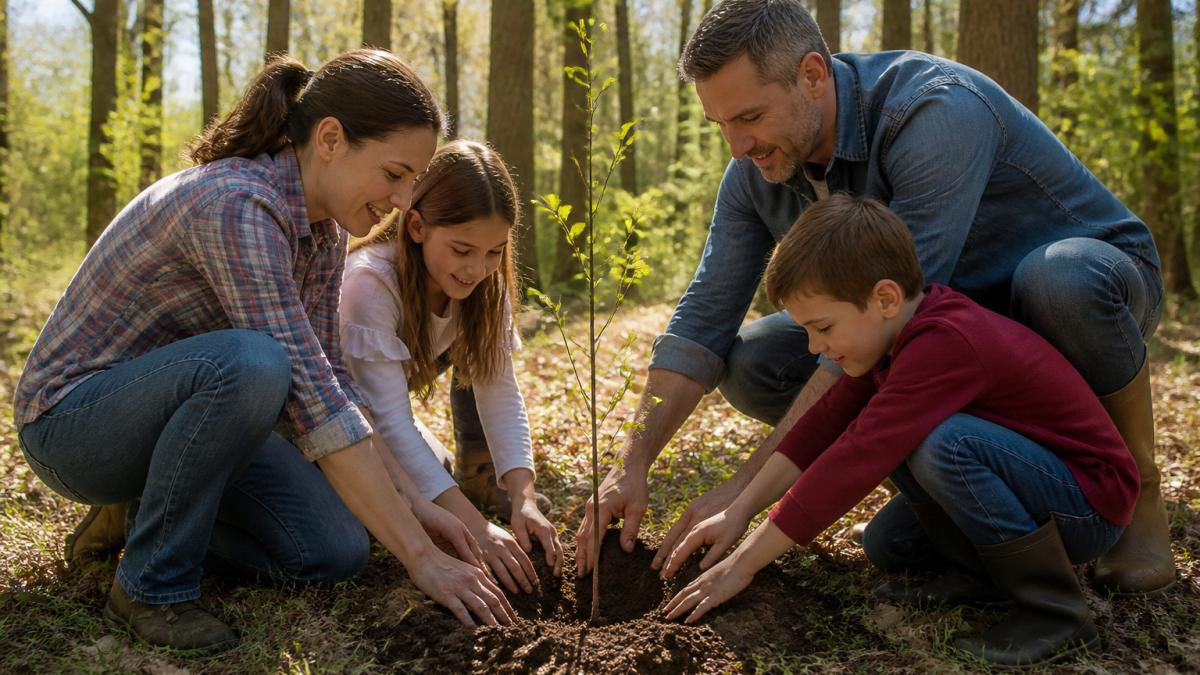
- Plant the tree. Staff or volunteers set the tree in the ground with the family present if you wish.
- Record the dedication. Note the tree’s location so family can visit it in the years ahead.
Planting a young tree in a structured program gives it a better chance to survive. USDA Forest Service research on establishment success of urban trees found that high survival rates for young trees are achievable when planting projects are well organized and supported by partners.
Choosing a Memorial Tree: Species, Site and Long-Term Considerations
The right tree depends on where it will grow and how much care it will need. Native trees usually handle local weather and soil better than imported species.
You can explore the tree species planted at Sunset Sanctuary to see what grows there and how to pick one. Start by asking three questions:
- How much sun and shade does the spot get?
- Will the tree have room to grow to full size?
- Do you want the tree to be a focal point or part of a larger grove?
Site matters as much as species.
If you want to see planting options in person, you can discover the memorial trees at Sunset Sanctuary and learn about dedication options in a quiet setting.
Ask how the preserve manages land use, protects its trees, and plans for the future.
Memorial Tree Cost: What Families Should Budget For
A memorial tree is a multi-decade commitment, so families need a budget framework rather than a single ticket price.
The five cost buckets to plan for:
- Site or dedication fee. The preserve’s charge for the memorial site, which can vary by the type of site selected.
- Tree and planting. Ask directly whether the tree is included in the fee.
- Plaque, marker, or engraving. Ask for dimensions and material before comparing quotes.
- Ceremony and visitation. Confirm what is included in the base fee.
- Long-term care endowment. The line item families most often forget. Ask how the preserve covers ongoing care and what happens if a tree dies.
Questions that surface hidden costs:
- Is the tree guaranteed, and for how long? What happens if it dies in year one versus year ten?
- Is there an annual maintenance fee, or is care prepaid through an endowment?
- Are there limits on the number of visitors, decorations, or ceremonies at the site?
- What is the policy if the preserve changes hands or the land use changes?
A low dedication fee with no care endowment can cost more over time than a higher fee that includes perpetual maintenance. Ask where the care money sits and who controls it.
How to compare a memorial tree against a traditional burial:
A cemetery plot typically involves a plot fee, a marker, and opening and closing charges, and many cemeteries also charge annual or perpetual care. Build a side-by-side table with the same five buckets for each option so you compare like with like.
Current pricing is available on the Sunset Sanctuary pricing page, and you can see the conservation memorial tree site options and pricing before you decide. Pricing depends on the services you select, so request a written quote.
Budget for the tree, the plaque, the ceremony, and the care fund, not just the site fee. A written, itemized quote is the only fair way to compare two sanctuaries.
Memorial Tree Care: Keeping a Living Tribute Healthy for Decades
A memorial tree passes through three care phases, and the work, and the risks, change at each one. Understanding the phases helps families ask the right questions of the preserve.
Phase 1: Establishment (years 1-3). This is the make-or-break window.
Phase 2: Growth (years 4-15). Once established, the tree needs less water but more structural attention.
Signs of stress and what they usually mean:
- Wilting leaves during dry weather, often drought stress, but check soil moisture first; wilting in wet soil can signal root problems.
- Bark damage from mowers or animals, wounds that break the bark invite decay; guard trunks in maintained areas.
- Leaves that turn an unusual color out of season, nutrient deficiency, soil pH mismatch, or root damage; a soil test is cheaper than a replacement tree.
- Dieback at the top of the crown, a serious sign that often points to root or vascular problems; get an assessment early.
Species and site trade-offs. Native trees generally handle local weather, soil, and pests better than imported species, but “native” is not a single answer.
Measuring whether the tribute is thriving. Ask the preserve how it tracks outcomes. Useful, trackable indicators include:
- Survival rate of planted trees at one, three, and five years.
- Canopy growth, trunk caliper and crown spread measured on a schedule.
- Native species diversity in the understory and surrounding habitat.
- Habitat use, nesting, pollinators, and wildlife observed in the grove.
Ask the preserve how it tracks outcomes before you choose a site.
The preserve includes over 80 acres of forest and 20 acres of wildflowers.
Winter often worries families. A bare tree can look sad at first, but many native species have quiet beauty in cold months.
Research on heritage trees shows that large, sunny, standing trees can support a surprising range of life. MDPI Forests journal study on heritage trees and saproxylic insects found that these trees serve as important sanctuaries for wildlife, which is one reason a memorial tree can remain meaningful for decades.
The three care phases differ in the work they demand and the risks they carry, as summarised below.
| Phase | Main focus | Key risk |
|---|---|---|
| Establishment (years 1-3) | Consistent moisture, mulch ring | Planting too deep, overwatering |
| Growth (years 4-15) | Structural pruning, understory control | Included bark, competing vegetation |
| Maturity (year 15 onward) | Deadwood removal, crown monitoring | Decay, root disturbance |
Frequently Asked Questions
What is a tree sanctuary?
A tree sanctuary is a protected natural area where memorial trees are planted in honor of people or pets. Instead of a headstone, the living tree becomes the marker, and the surrounding land is managed for habitat and conservation. Sunset Sanctuary’s 135-acre nature preserve in Farmington, Minnesota, includes more than 80 acres of forest and 20 acres of wildflowers, giving memorial trees a setting that changes with the seasons. Families can visit, reflect and watch the planting grow over time. Pricing and planting options vary, so check the Sunset Sanctuary website or request a quote for current details.
How much does it cost to plant a memorial tree?
Costs depend on the tree chosen, planting date, and any services included, so there is no single set figure to quote here. Sunset Sanctuary does not publish a typical price in this article; current pricing is available on the Sunset Sanctuary website, where you can also request a quote. When comparing options, ask what the price covers, including planting, marker or record keeping, and ongoing care, so you compare the same services side by side.
Can ashes be placed with a memorial tree?
Some families ask whether cremated remains can be placed near a memorial tree, subject to local rules and the site’s policies. Before planning this, confirm with the sanctuary what is permitted, how the remains should be prepared, and where the tree will be placed. Clear communication with the provider helps avoid surprises on planting day and ensures the memorial is handled with the respect the family intends.
How long does a memorial tree take to grow?
Growth rate depends on species, soil, moisture and climate. Many young trees need several years to establish their root systems and show steady height gain, and larger canopy growth often takes a decade or more. Early care matters most: consistent watering during the first growing seasons improves the chances of survival. Ask the sanctuary about the species planted and its typical growth pattern so your family knows what to expect over time.
