
5 Best Trees for Memorial Gardens in Minnesota
Quick Summary
The five best trees for memorial gardens in Minnesota are serviceberry, American elm, red maple, hardy oak, and a low-care option such as hawthorn or compact crabapple. The right choice matches a tree’s hardiness, mature size, and seasonal display to the site and to the visitors who will return. Native and well-adapted species suit Minnesota’s cold winters and variable soils best.
- Confirm each tree is rated for your planting zone, since most of Minnesota falls in zones 3-5.
- Keep elm and oak at least 20-30 feet from paths, headstones, and buildings because of their large roots.
- Serviceberry suits small plots and offers early white spring blooms and fall color.
- Water new trees about 1 inch per week for the first two growing seasons.
- Record the tree’s location and species so future family members can find it.
Table of Contents
- Choosing a Living Tribute: What a Memorial Tree Needs to Do
- How We Selected These Five Trees for Minnesota Conditions
- Quick Comparison: Five Memorial Trees at a Glance
- Minnesota Native Trees for Memorial Gardens: Serviceberry and American Elm
- Fast-Growing Shade Trees in Minnesota: Red Maple and Hardy Oak
- Low-Maintenance Trees for Minnesota Landscapes: Choosing a Tree You Can Leave Alone
- Planting Logistics, Site Care and Long-Term Protection for Your Memorial Tree
- Planning a Memorial Tree at Sunset Sanctuary in Farmington
- Frequently Asked Questions
Choosing a Living Tribute: What a Memorial Tree Needs to Do
Sunset Sanctuary, a 135-acre nature preserve in Farmington, Minnesota, offers families a way to honor a loved one with a living tree rather than a stone marker.
A memorial tree must survive Minnesota winters, grow into a recognizable form over decades, and give visitors a reason to return in every season.
Before you choose a species, consider these practical questions:
- Will it be hardy enough? Minnesota winters are cold, and late frosts can damage new growth. Confirm the tree is rated for your planting zone.
- How big will it get? Mature height and spread determine whether the tree fits the space without crowding paths or neighboring plantings.
- What will it look like across seasons? Spring blooms, summer shade, fall color and winter bark all shape how the tree feels to visit.
A tree that meets all four tests will serve as a living tribute for generations, and
How We Selected These Five Trees for Minnesota Conditions
- Minnesota hardiness. The tree must be a known performer in the state’s cold winters and variable soils.
- Memorial suitability. The tree should have a distinctive, calm form or seasonal display that works in a quiet garden.
- Manageable size. The tree should fit a planned memorial site without outgrowing it within a few decades.
- Native or well-adapted status. Where possible, we favored native species or long-established Minnesota landscape trees.
Quick Comparison: Five Memorial Trees at a Glance
The table below summarizes the five trees and their main strengths for a Minnesota memorial garden. Use it as a starting point, then confirm current hardiness ratings and availability with a local extension office or nursery, because cultivar performance and stock vary by supplier and year.
| Tree | Type | Mature Height / Spread (typical) | Growth Rate | USDA Zones | Sun | Soil / Water | Seasonal Highlight | Best For |
|---|---|---|---|---|---|---|---|---|
| Serviceberry (Amelanchier spp.) | Native flowering tree | 15-25 ft / 15-20 ft | Moderate | 3-8 | Full sun to part shade | Moist, well-drained; moderate water | Early white blooms, fall color, edible fruit | Small gardens and visible spring tributes |
| American elm (Ulmus americana, disease-resistant cultivars) | Native shade tree | 60-80 ft / 40-60 ft | Fast | 3-9 | Full sun | Adaptable; moderate to high water | Vase-shaped canopy, yellow fall color | Broad shade and a classic silhouette |
| Red maple (Acer rubrum) | Native shade tree | 40-60 ft / 30-40 ft | Moderate to fast | 3-9 | Full sun to part shade | Moist to wet; moderate water | Bright red fall color | Quick shade and reliable autumn display |
| Hardy oak (e.g., white oak, Quercus alba; pin oak, Q. palustris) | Native shade tree | 50-80 ft / 50-80 ft | Slow | 3-9 | Full sun | Well-drained; low to moderate water once established | Sturdy structure, acorns, wildlife value | Multigenerational legacy plantings |
| Low-care option (e.g., hawthorn, Crataegus spp.; or a compact crabapple, Malus spp.) | Native or adapted ornamental | 15-30 ft / 15-25 ft | Moderate | 3-7 | Full sun | Adaptable; moderate water | Spring flowers, fall fruit, tidy form | Families who want a tree they can leave alone |
How to read the table. Height and spread are typical mature ranges for the species in Minnesota; cultivars can be smaller or larger, so check the tag.
Regional differences within Minnesota. Northern counties and the Iron Range sit in colder zones (3-4), where serviceberry and oak are dependable and red maple may suffer winter dieback in exposed sites.
Memorial-garden constraints. A memorial tree is a destination, so measure the space and think about roots and access.
Minnesota Native Trees for Memorial Gardens: Serviceberry and American Elm
Native trees suit memorial gardens because they fit the local climate and support regional wildlife. Two native choices stand out for Minnesota sites.
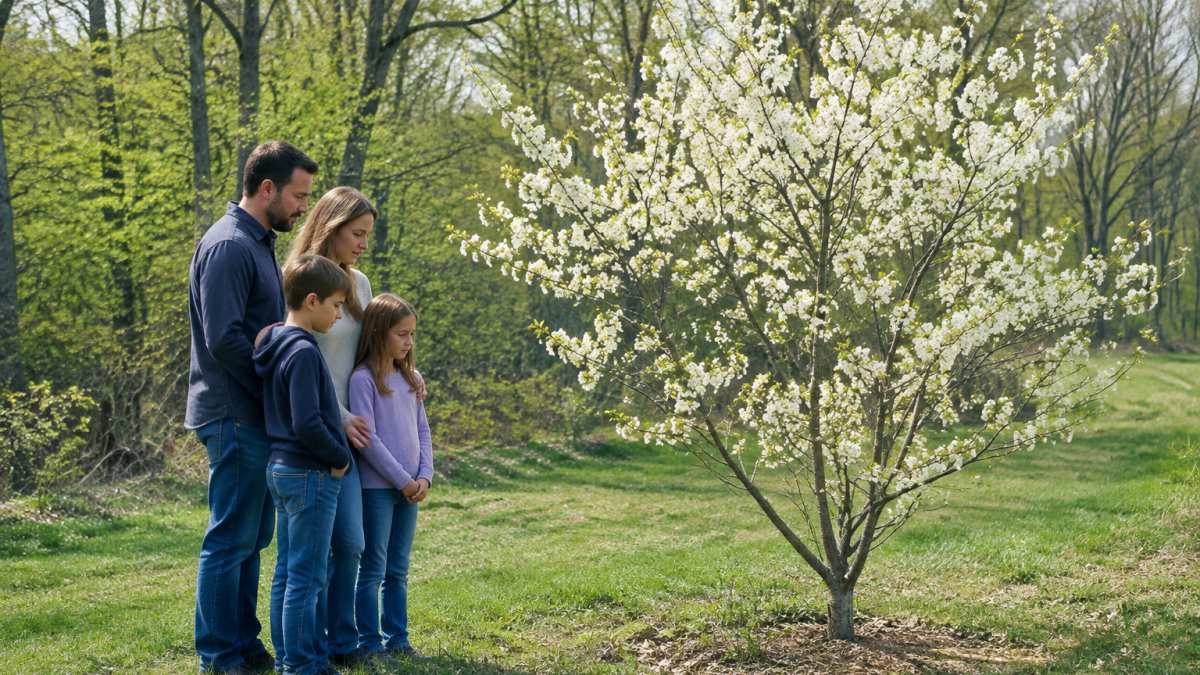
Serviceberry: Spring Blooms and Fall Color
Serviceberry is one of the first trees to flower in spring, producing white blossoms before most of the landscape wakes up.
Its modest size suits smaller memorial plots, its spring blooms give visitors a clear seasonal moment, and its fall color adds warmth as the year closes. Avoid deep shade, where blooming drops off sharply; give it a sunny or partly sunny spot.
American Elm: Vase-Shaped Shade for a Lasting Tribute
American elm is a classic Minnesota shade tree with an upward-reaching, vase-shaped canopy.
American elm offers broad shade and a graceful silhouette many families find comforting. Choose cultivars with improved disease resistance over the species alone, and ask your planting provider which varieties they recommend for your site.
Fast-Growing Shade Trees in Minnesota: Red Maple and Hardy Oak
When a memorial garden needs shade within a reasonable timeframe, fast-growing and sturdy shade trees help.
Red maple grows relatively quickly and delivers bright red fall color that many visitors remember. Plant it where roots have room to spread, away from foundations and sidewalks.
Hardy oak trades speed for longevity. Oaks grow more slowly but can live for centuries, which makes them a strong choice for a legacy planting meant to outlast the families who choose it.
Low-Maintenance Trees for Minnesota Landscapes: Choosing a Tree You Can Leave Alone
Not every family can visit often or maintain a garden closely, so low-maintenance trees suit memorial sites where long-term care is a concern.
What actually makes a tree low-maintenance in Minnesota. Three traits matter most: reliable cold hardiness that avoids winter dieback, a naturally tidy form that does not require constant shaping, and tolerance of the site’s existing soil and moisture. Native and well-adapted species generally meet these tests better than exotic ornamentals, which often need more water, winter protection, or pest management.
Specific low-care choices for a memorial garden.
- Serviceberry (Amelanchier spp.). Native, small, and adaptable. It blooms early, fruits in summer, and colors in fall. Once established, it needs little beyond occasional renewal pruning. A strong choice for small plots and near seating areas.
- Hawthorn (Crataegus spp.). Native or adapted, with spring flowers, fall fruit, and a dense, tidy form. Many species are hardy to zone 3-4 and tolerate wind and poor soil better than most ornamentals. Some have thorns, so choose a thornless cultivar near paths or gathering spaces.
- Compact crabapple (Malus spp.). Choose a disease-resistant cultivar for low spray needs. Crabapples stay small, flower heavily in spring, and hold fruit into winter for birds. They need full sun and good air circulation to avoid disease.
- White oak (Quercus alba) or bur oak (Q. macrocarpa). Slow, but once established among the most self-sufficient trees available, needing little water after the first two years and living for centuries. Expect a modest tree for the first decade.
What “low-maintenance” really means in practice. Most trees need regular watering during their first two growing seasons, roughly 1 inch per week from rain or irrigation, delivered deeply rather than daily. After that, established native trees generally need water only during extended dry spells. Mulch annually to suppress weeds and hold moisture, keeping mulch a few inches from the trunk.
Memorial-garden constraints that affect care. If the site is visited rarely, choose a tree that matches its natural moisture rather than one that needs irrigation.
Long-term stewardship. Ask the planting provider who waters and prunes the tree and whether the land is protected from future development.
Planting Logistics, Site Care and Long-Term Protection for Your Memorial Tree
Choosing the right species is only part of the process. Planting logistics and long-term care determine whether the tree thrives.
Before planting, check:
- Hardiness zone. Confirm your site’s USDA hardiness zone and choose trees rated for it.
- Sun exposure. Most of these trees need full or partial sun.
- Soil and drainage. Test drainage before planting. Waterlogged soil can damage roots.
- Space. Account for mature spread so the tree does not crowd paths or nearby plantings.
During the first two years:
- Water deeply during dry spells.
- Mulch around the base, keeping mulch away from the trunk.
- Avoid heavy pruning unless a branch is damaged.
For long-term protection:
- Record the tree’s location and species so future family members can find it.
- Confirm how the site is managed over time, including whether the land is protected.
Planning a Memorial Tree at Sunset Sanctuary in Farmington
If you want a memorial tree that sits within a protected nature preserve, browse the memorial tree locations at Sunset Sanctuary to see the sites available for a dedicated tribute. Families weighing costs can review current pricing at Sunset Sanctuary before committing. When you are ready to act, you can plant a remembrance tree at Sunset Sanctuary and secure a lasting site among forest and wildflower landscape. To see which species are actually planted on the preserve, explore the tree species planted at Sunset Sanctuary.
Sunset Sanctuary’s 135-acre preserve includes over 80 acres of forest, 20 acres of wildflowers and a tranquil pond, giving a memorial tree a setting that changes with the seasons. Complementing these enduring trees with seasonal sympathy flowers for memorials creates a layered, living tribute that honors a loved one throughout the entire year.
If you have questions about planning, reach out for cemetery planning at Sunset Sanctuary. Contact us today to discuss the right tree and location for your family’s needs.
Frequently Asked Questions
What is the best tree to plant for a memorial?
There is no single best tree, because the right choice depends on the site, the space available and how the family wants to remember their loved one. In Minnesota, cold-hardy natives such as serviceberry and American elm are strong starting points for a memorial garden. Serviceberry offers spring blossoms and fall color in a manageable size, while American elm provides broad shade on a larger site. Start by confirming sun exposure, drainage and room for mature spread before narrowing the list.
Which trees are hardy enough for Minnesota winters?
Many trees perform well in Minnesota winters, but hardiness varies across the state and between USDA zones. Trees such as red maple, sugar maple, pin oak and white oak are commonly listed among cold-climate options for memorial planting. Before buying, check the plant’s stated hardiness zone against your location, and ask a local nursery whether the cultivar has a record of surviving northern winters. Planting in a sheltered spot also helps young trees establish.
How long does it take a memorial tree to grow?
Growth rate depends on species, soil, water and planting care. Fast-growing shade trees can add substantial height within a decade, while slower natives such as oaks may take many years to reach a mature form. Smaller flowering trees like serviceberry often reach a noticeable size sooner and begin flowering within a few years. Families planning for a long-term tribute should look at the expected mature height and spread, not only the size of the sapling when planted.
How do I choose a tree for a memorial garden?
Begin with the practical limits of the site: sun exposure, soil drainage, and the distance to buildings, power lines and walkways. Next, consider the tree’s mature size, its seasonal interest such as spring blooms or fall color, and how much maintenance it needs. Finally, weigh the personal meaning, since some families choose a tree for its flowers, its shade or a connection to the person they are remembering. Comparing these criteria side by side makes the decision clearer.
What should I consider before planting a memorial tree?
Confirm that the planting site allows for the tree’s full mature spread and that the ground drains well. Check local planting rules and whether the site is public or private land, and plan for how the tree will be watered during its first two growing seasons. Think about access for future visits and what happens if the property changes hands. Sunset Sanctuary can answer questions about planting and preserve arrangements; contact the team for current options and details.
