Eco Friendly Burial Alternatives Minnesota: A Practical Guide
Quick Summary
Eco friendly burial alternatives in Minnesota include green burial, natural burial in preserves, memorial tree planting, water cremation, and natural organic reduction, which became legal in the state on July 1, 2025. Each reduces land disturbance and avoids chemical preservation in different ways, and costs vary by line item.
- Green burial means unembalmed burial in a biodegradable container, without a concrete vault.
- Natural burial in a preserve protects the land permanently, so preserve plots often cost more.
- Memorial tree planting places ashes at the roots of a living tree, which grows as a marker.
- Natural organic reduction became a legal option in Minnesota on July 1, 2025.
- Ask every provider for an itemized estimate, since transport, permits, and markers add to the total.
Table of Contents
- What Eco Friendly Burial Means in Minnesota
- Side-by-Side Comparison of Burial Methods
- Are Green Funerals Legal in Minnesota?
- Green Burial Cost in Minnesota: What Fees Typically Include
- Human Composting Minnesota: How Natural Organic Reduction Works
- Natural Burial MN: Caskets, Shrouds and Environmental Impact
- Planning Your Eco Friendly Memorial at Sunset Sanctuary
- Frequently Asked Questions
What Eco Friendly Burial Means in Minnesota
Eco friendly burial alternatives in Minnesota are funeral options that reduce land disturbance, avoid chemical preservation, and let the body return to the earth. Green burial, natural burial, memorial tree planting, and natural organic reduction all fall under this umbrella.
Green burial generally means a body is buried without embalming, in a biodegradable container, in ground that is not sealed with a concrete vault. Natural burial emphasizes the site itself, often a preserved woodland or meadow. The National Funeral Directors Association reports that interest in these options is rising, with 61.4% of consumers expressing interest in green funeral options, up from 55.7% in 2021 (NFDA consumer survey data cited by Interra Green Burial).
Minnesota offers more than one path. Providers present natural burial, water cremation, and natural body composting as options for families who want a lower-impact farewell. Natural organic reduction became a legal option in Minnesota on July 1, 2025 (Minnesota Department of Health guidance on natural organic reduction).
Definition: A memorial tree is a living tribute in which a tree is planted in a protected natural setting and a loved one’s ashes are placed at its roots. The tree serves as a permanent, growing marker rather than a stone.
Side-by-Side Comparison of Burial Methods
Families weighing eco friendly options usually compare six things: what happens to the body, how long the process takes, what remains afterward, land use, Minnesota availability, and cost structure. You can also compare woodland graves, tree planting, and cremation alternatives in one guide. The table below summarizes how the main approaches differ, and the notes after it explain the trade-offs competitors rarely spell out.
| Method | What Happens to the Body | Timeline | Remains Afterward | Land Impact | Availability | Cost Structure |
|---|---|---|---|---|---|---|
| Green burial | Buried unembalmed in a biodegradable container, no vault | Same day | Body returns to soil | Low, no vault | Widely available at participating cemeteries | Plot + container + opening/closing + service |
| Natural burial in a preserve | Buried unembalmed in protected woodland or meadow | Same day | Body returns to soil | Low, land permanently protected | Limited to dedicated preserves | Plot or conservation fee + container + service |
| Memorial tree planting | Ashes incorporated at the roots of a planted tree | After cremation | Ashes rest at a tree | Low, living tree | Available where tree plots are offered | Tree plot + cremation + service |
| Water cremation (alkaline hydrolysis) | Body reduced by water, heat, and alkali | Hours to a day | Liquid and bone ash | Minimal | Growing but not universal | Per-process fee + ashes container + service |
| Natural organic reduction | Body broken down by microbes in a vessel | Several weeks | Soil, returned to family | Minimal | Newly legal; provider-dependent | Per-process fee + vessel/soil handling + service |
Green burial suits people who want a traditional-style ceremony with a natural setting. The main drawback is that a burial plot must be purchased and the site is permanent, so the land commitment is real even though the environmental footprint is low.
Natural burial in a preserve adds a conservation layer: the land is protected in perpetuity, which is why preserve plots often cost more than a standard green-burial plot at a conventional cemetery.
Memorial tree planting suits families who want a visitable, living memorial. The tree grows over time, so the site becomes more meaningful with each season. Its limit is that ashes are required, so families choosing whole-body burial need a different approach.
Watch out: A common pattern is for families to compare only the headline plot or process fee and then discover that transportation, container, opening/closing, and permit charges add substantially to the total. Ask every provider for an itemized estimate before comparing methods on price.
Are Green Funerals Legal in Minnesota?
Yes. Green burial is legal in Minnesota, and natural organic reduction became legal on July 1, 2025. If you are weighing a memorial tree planting as a natural burial alternative under these rules, compare its requirements against other green options. Families should still confirm local requirements with the cemetery or provider before planning, since rules for burial sites, containers, and permits can vary by county and municipality.
A Minnesota legislative study on green burial and natural organic reduction recommends safeguards focused on environmental protection and public health safety (Minnesota House of Representatives Green Burial and Natural Organic Reduction Study). Providers operating in the state follow these standards, and a reputable provider will walk you through them at the start.
Green Burial Cost in Minnesota: What Fees Typically Include
Cost is the question families ask first, and it is the one most guides dodge. The honest answer is that eco friendly burial in Minnesota is priced as a bundle of separate line items, and the total depends on which items you need. For concrete pricing on one option, see memorial tree costs in Minnesota and what that one-time fee covers. Rather than quote a single number that will be wrong for most families, this section explains what each line item is, why it varies, and what to ask so you can compare quotes fairly.
The line items that make up a green burial quote:
- Burial site, plot, or memorial tree. This is usually the largest single item. A plot at a participating cemetery, a conservation plot at a dedicated preserve, and a memorial tree plot are priced differently, and preserve or tree plots often carry a conservation component built into the price.
- Biodegradable container or shroud. Simple wood, wicker, cardboard, and cloth shrouds sit at different price points. Ask whether the container is included in the plot fee or billed separately.
- Transport and preparation of remains. Distance, time of day, and whether the provider handles preparation all affect this line. Some providers include local transport; others bill per mile.
- Permits and cemetery or preserve fees. Filing fees, opening and closing of the grave, and preserve administration charges are commonly separate from the plot price.
- Staff time for the service. Graveside service, coordination, and aftercare are sometimes bundled and sometimes hourly.
- Marker, plaque, or GPS location record. Natural burial grounds often restrict or prohibit stone markers, so a GPS record or natural marker may be the only way to locate the grave, and it may be a paid add-on.
Why figures vary so widely. A green burial at a conventional cemetery that already allows natural burial, a conservation burial at a dedicated preserve, and a memorial tree plot are three different products with three different cost structures. Providers also differ in how much they bundle, so a lower headline price can end up higher once transport, permits, and markers are added.
How to compare quotes fairly. Ask each provider for an itemized estimate that lists every line above, then compare totals rather than headline prices. Confirm in writing which items are included, which are optional, and which are billed at need. Ask whether the plot fee includes perpetual care and what happens if the cemetery or preserve changes ownership.
Watch out: Some providers do not publish prices online and will only quote after a consultation. That is normal in this market, but it means you should request the itemized estimate in writing before you commit, and compare at least two providers on the same line items.
You can explore our current memorial tree options, or request a consultation to discuss your situation. Pricing depends on the option you choose, so check our website for current details or request a quote.
Human Composting Minnesota: How Natural Organic Reduction Works
The process is now a recognized option in Minnesota. The Minnesota Department of Health describes it as a low-emission alternative to conventional methods (Minnesota Department of Health natural organic reduction page). Not every provider offers it yet, so confirm availability before planning around it.
Natural Burial MN: Caskets, Shrouds and Environmental Impact
Eco friendly burial depends on what surrounds the body. Common choices include simple wood caskets, wicker caskets, and burial shrouds made from unbleached cotton or linen. These materials break down naturally, which allows the body to return to the soil without the concrete burial vault used in many conventional graves.
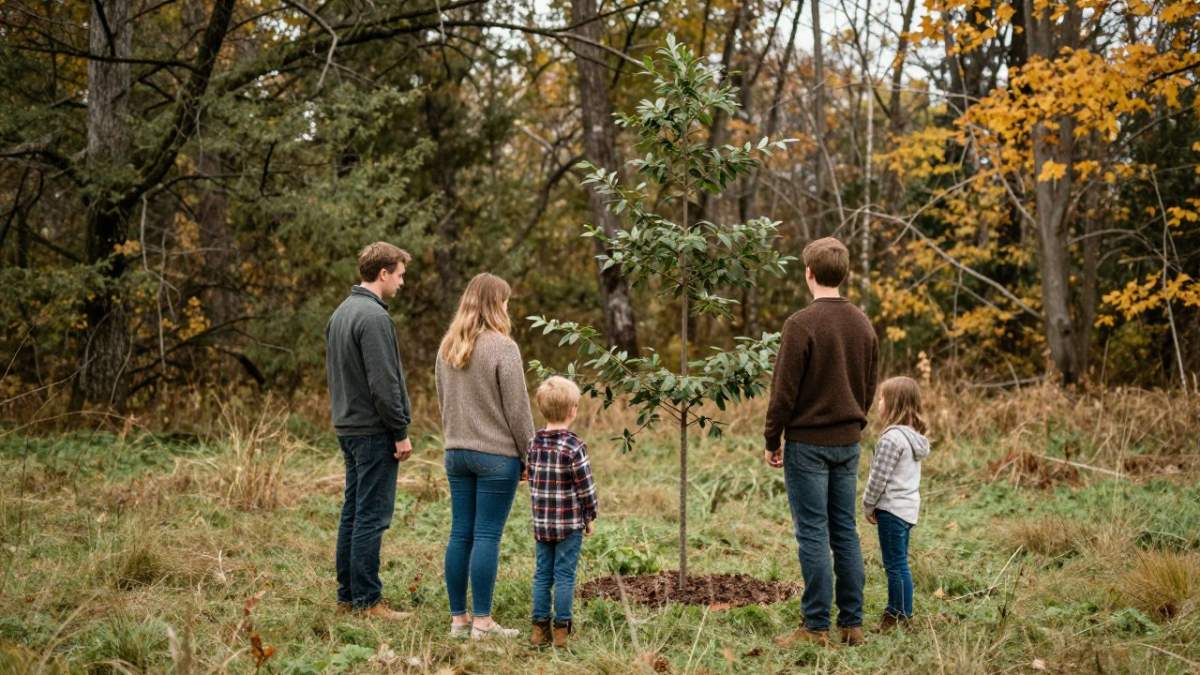
Environmental impact is the main reason families choose natural burial. Conventional burial can use embalming fluids and large amounts of concrete and metal. Natural burial avoids most of these inputs and protects land for wildlife and future visitors.
Interra Green Burial lists natural materials such as wood and bamboo among its options (Interra Green Burial services overview). When choosing materials, ask providers what each item is made of and how long it takes to decompose in your chosen setting.
Planning Your Eco Friendly Memorial at Sunset Sanctuary
Planning ahead gives families time to choose a place, record their wishes, and avoid rushed decisions. Preplanning also lets the person state what they want, rather than leaving loved ones to guess.
At Sunset Sanctuary, our 135-acre nature preserve in Farmington includes more than 80 acres of forest, 20 acres of wildflowers, and a tranquil pond. Families can plant a memorial tree, which can hold up to five sets of ashes, and record GPS coordinates so loved ones can always find it. Visitors can walk the trails and picnic near the tree.
A practical sequence for planning:
- Decide whether whole-body or ashes-based burial suits your family.
- Choose a site, whether a preserve, a natural burial ground, or a memorial tree.
- Record your wishes in writing, including container and ceremony preferences.
- Confirm costs and what each fee covers.
- Share your plan with the people who will carry it out.
To plan a memorial at Sunset Sanctuary or review current pricing, visit our website and request a consultation to walk through your options. You can also explore our current memorial tree options with clear pricing for tree, flower, lakeside, and pet gardens.
Frequently Asked Questions
Are green funerals legal in Minnesota?
Yes. Green burial, in which the body is buried without embalming or a concrete vault in a natural setting, is permitted in Minnesota. Natural organic reduction, a form of human composting, is now a recognized option in the state. Families should confirm the specific requirements for each method with their chosen provider before making arrangements, since rules for transport, permits and final placement can vary by county.
What is the difference between green burial and human composting?
Green burial places the body directly in the ground, usually in a biodegradable container or shroud, so it returns to the earth over time without embalming or a concrete vault. Human composting, known in Minnesota as natural organic reduction, converts the body into soil in a vessel over several weeks. Both are considered low-impact options, but green burial keeps the body in a fixed resting place, while composting produces soil that families can choose to keep or use.
How much does an eco-friendly burial cost?
Sunset Sanctuary does not publish prices in this article. Costs depend on the method, the container or casket chosen, the location and the services included, such as transport, permits or a memorial ceremony. Ask any provider for an itemized quote that lists exactly what fees cover, and compare it with the total cost of conventional burial to see the full difference. Current pricing and options are available on the Sunset Sanctuary website.
Can you have a natural burial without a casket or vault?
Yes. Natural burial does not typically require a concrete burial vault. Requirements can vary by cemetery or natural preserve, so confirm which containers are accepted before the arrangements are finalized.
