7 Natural Burial Options for an Eco-Friendly Farewell
Last Updated: October 29, 2026
Quick Summary
Natural burial options include conservation burial, memorial tree planting, shroud burial, and home funeral plus burial, all using biodegradable containers and no embalming. Costs vary widely by cemetery and region, so compare rules and pricing before you commit. Interest is rising, with a Wake Forest University School of Law survey finding over half of respondents would consider a green burial.
- Conservation burial funds protected land and suits families wanting a permanent legacy.
- Memorial tree planting places ashes or remains beneath a planted tree after cremation.
- Shroud burial uses biodegradable cloth with no casket for strict green-certification seekers.
- Confirm local cemetery regulations, since some burial choices are not permitted everywhere.
- Sunset Sanctuary’s 135-acre Farmington preserve offers memorial tree planting as a living tribute.
Table of Contents
- Natural Burial Options: What’s Actually Available
- Understanding Natural Burial Cost and Green Burial Pros and Cons
- Natural Burial vs Cremation and Choosing an Eco-Friendly Coffin
- Planning a Living Tribute at Sunset Sanctuary
- Frequently Asked Questions
Natural Burial Options: What’s Actually Available
Natural burial options are final disposition methods that return a body to the earth with minimal environmental impact, using biodegradable containers and no embalming. At Sunset Sanctuary, we field questions about these choices every week, and the honest answer surprises people: the menu is wider than most families expect. A Wake Forest University School of Law survey found that over half of respondents would consider a green burial, and interest keeps climbing. Below, we break down what each option actually involves, what it costs, and how it compares to cremation.
Understanding Natural Burial Cost and Green Burial Pros and Cons
Costs vary widely by cemetery and region, so treat any single figure with suspicion. The Green Burial Council notes that cemeteries set their own rules and regulations, which makes comparison shopping essential. Weigh the green burial pros and cons honestly: lower material costs and real environmental benefit on one side, limited site availability and family discomfort with the unfamiliar on the other.
| Option | What It Involves | Best For |
|---|---|---|
| Conservation burial | Burial in protected land that funds conservation | Families wanting a permanent legacy |
| Memorial tree planting | Ashes or remains beneath a planted tree | Those choosing cremation first |
| Shroud burial | Wrapped in biodegradable cloth, no casket | Strict green-certification seekers |
| Home funeral plus burial | Family-led care, simple container | Hands-on, ritual-focused families |
For a deeper side-by-side, see our guide to green burial versus traditional burial, and for the environmental case, read about traditional burial’s impact versus living memorials.
Natural Burial vs Cremation and Choosing an Eco-Friendly Coffin
Cremation uses significant energy, while natural burial avoids embalming fluid and concrete vaults entirely. If cremation is already the plan, what happens after cremation opens several meaningful paths. For an eco-friendly coffin, look for shroud, wicker casket, hemp, cotton, willow, or cardboard constructions. Watch out: not every option marketed as green is legal everywhere. A 2026 Choice Mutual analysis cautions that some burial choices are not permitted in every location, so confirm local cemetery regulations before you commit.
Planning a Living Tribute at Sunset Sanctuary
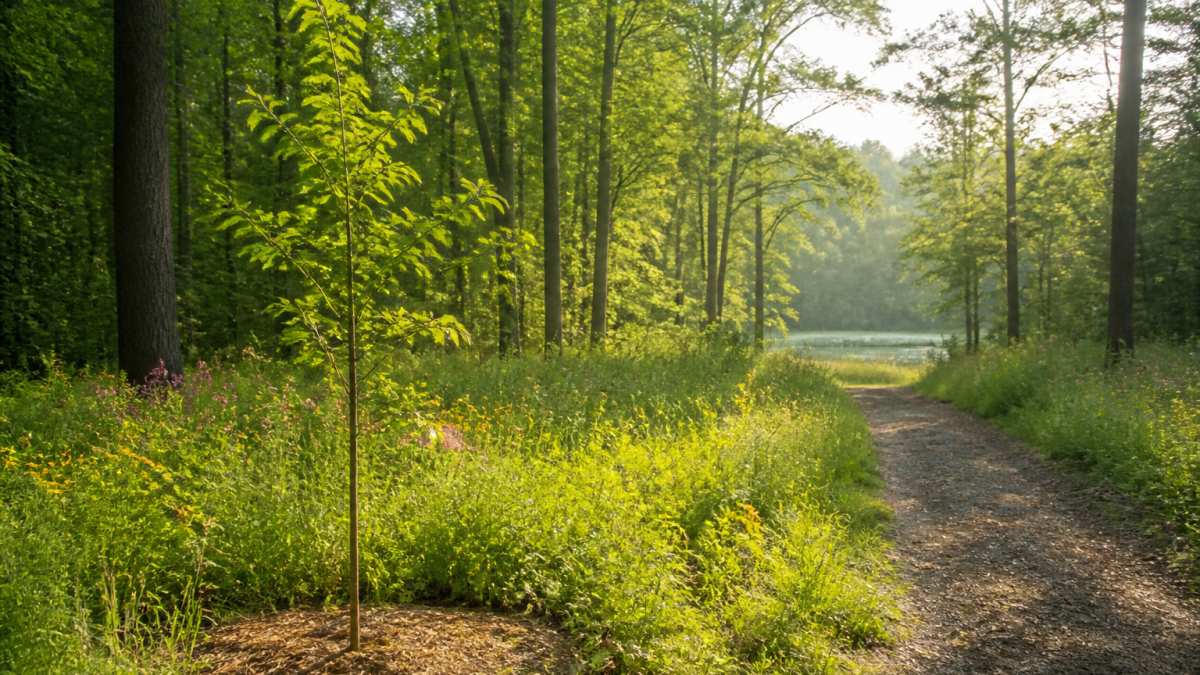
Our 135-acre preserve in Farmington offers memorial tree planting as a living tribute, with over 80 acres of forest, 20 acres of wildflowers, and a tranquil pond. Families can book a memorial site or explore tree pod burials at Sunset Sanctuary for a more distinctive farewell. Pricing depends on garden choice and site type, so check our website for current pricing or a quote.
Frequently Asked Questions
What is the difference between natural burial and green burial?
The two terms are often used interchangeably. Green burial usually refers to burial in a certified cemetery that meets specific environmental standards, such as no embalming fluid, no concrete vault, and biodegradable containers. Natural burial is the broader idea: returning the body to the earth with minimal intervention. Certification matters because the Green Burial Council notes that cemeteries set their own rules, so what counts as green varies by provider. Ask any cemetery directly what practices they require and prohibit.
How much does a natural burial cost compared with a traditional funeral?
Natural burial cost depends on the provider, the plot, and the container you choose. Because natural burial skips embalming, metal caskets, and concrete vaults, the total is often lower than a traditional funeral, but cemetery fees and land costs vary widely by region. Sunset Sanctuary’s website has current pricing, so you can compare a memorial tree planting against a conventional cemetery plot before committing.
Can cremation be part of a natural burial plan?
Yes. Many families combine cremation with a natural setting, scattering or interring ashes in a woodland or planting a memorial tree above them. If you are weighing natural burial vs cremation, consider what you want the site to do over time: a tree planting creates a growing, visitable place, while scattered ashes leave no fixed marker. Sunset Sanctuary can talk you through how a memorial tree works alongside either choice.
Choosing an earth-friendly farewell means navigating rules, costs, and family expectations all at once. Sunset Sanctuary makes that easier with protected conservation land, personalized memorial trees, and a landscape that changes beautifully with every season. Get started with Sunset Sanctuary and give your family a peaceful place to return to for generations.
